

If you’ve ever stood in a utility yard at 2 a.m., staring at a leaking vertical pipe while a cold rain soaks through your jacket, you’ve probably cursed the part of your brain that didn’t ask: “Wait, does this straight repair clamp even work here?” Let me start with a quick confession: I’m the supply manager at a company that makes straight repair clamps, and I get this question at least three times a day. Most days, the answer is yes—but not always, and not without a few important notes that even some veteran plumbers miss. I’ve spent the last five years testing these clamps in every possible scenario, from a wobbly 8-inch cast iron stack in a downtown high rise to a wobbly 4-inch PVC pipe on a residential well. Today, I want to break this down like I would explain it to a new apprentice: no jargon, just real-world facts that you can use the next time you grab a clamp off the shelf.
First, let’s get clear on what a straight repair clamp actually is. For anyone who’s not knee-deep in pipe repair, a straight repair clamp is a two-piece (sometimes one-piece, but almost always split) metal sleeve designed to wrap around a straight section of pipe to seal leaks—usually pinholes, small cracks, or even gaps from a failed weld. It’s called “straight” because it’s made for a straight pipe run, not the curved parts that need elbow clamps or specialty fittings. The core of it is a rubber gasket that lines the inside, which compresses against the pipe when you tighten the bolts on the clamp’s ends. That compression is what stops water (or gas, depending on what’s flowing through the pipe) from leaking out.
Now, vertical pipes are tricky because gravity works against you. On a horizontal pipe, the clamp is pressed evenly against the pipe all the way around, but on a vertical pipe, the weight of the water inside (or even just the force of gravity pulling down on the gasket) can create gaps if the clamp isn’t installed right. Wait, but here’s the thing: I’ve installed our Straight Pipe Leak Repair Clamp on vertical lines more times than I can count, and it works—when used correctly. The myth that straight clamps can’t go vertical usually comes from bad installs, not bad clamps. Let’s dive into the conditions where it works, and where it doesn’t.
Let’s start with the scenarios where a straight repair clamp is a perfect fit for a vertical pipe. First, if the leak is on a straight, undamaged section of vertical pipe. I’m talking about a 6-inch cast iron stack in a bathroom, a 4-inch PVC vent pipe on a roof, or even a 10-inch steel main line running up the side of a building. These are all straight sections, no bends near the leak, and that’s exactly what straight clamps are engineered for. I once had a client call me last year because a 3-inch PE (polyethylene) line feeding a farm’s irrigation system had sprung a leak 12 feet up a vertical support. He tried a specialty vertical clamp first, but it was backordered, so he grabbed our Straight Pipe Leak Repair Clamp and made it work. The only thing he had to adjust was his installation technique.
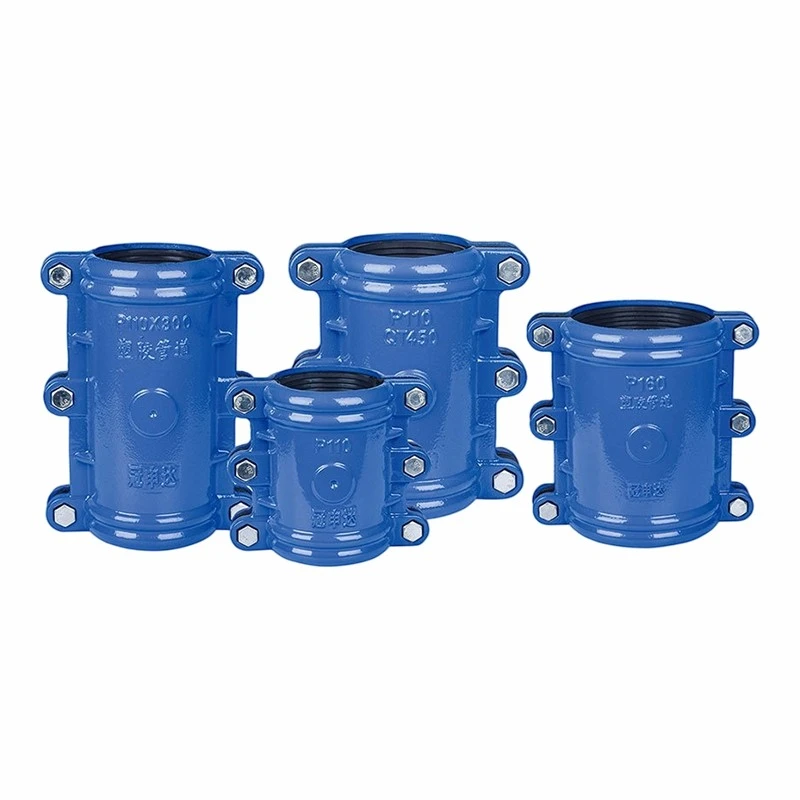
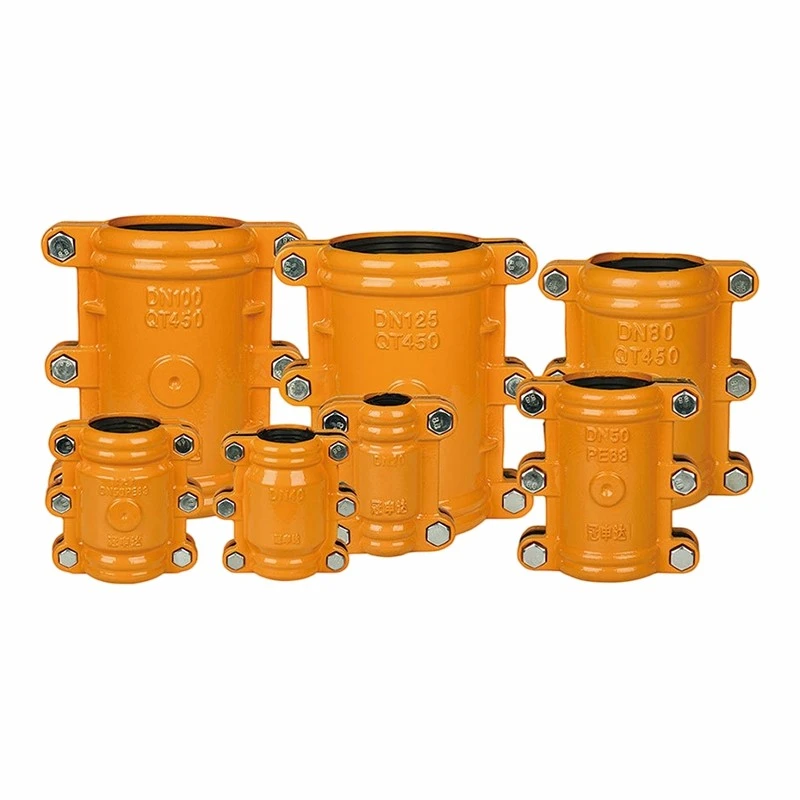
Speaking of installation technique—this is the make-or-break part. On a horizontal pipe, you tighten the bolts until the gasket just starts to squeeze, but on a vertical pipe, you have to top-load the clamp. That means when you place the clamp around the pipe, you don’t just set it; you lift the bottom half a half-inch (or more) against the direction of gravity before tightening the bolts. Why? Because if you just set the clamp, the gasket will sink down into a gap at the bottom, leaving the top part loose. That tiny gap is all it takes for a leak to start a week later. I’ve trained dozens of techs on this, and 90% of the failures I see are from skipping that simple step. Another installation tip: make sure the clamps are rated for the pressure and material of your pipe. Our Steel Repair Clamp works on high-pressure steel vertical lines, our PVC Pipe Repair Clamp is flexible enough for the rigid PVC used in residential vent stacks, our PE Pipe Repair Clamp has a softer gasket that seals well with PE’s slightly textured surface, and our Cast Iron Pipe Repair Clamp is built to fit the uneven, aged cast iron common in old buildings. Mixing and matching here is a recipe for disaster—always pick the clamp designed for your pipe material.
Now, let’s talk about when a straight repair clamp should NOT be used on a vertical pipe. This is important, because even though I sell these clamps, I’d never steer someone wrong. First, if the pipe is bent or out of alignment. Vertical pipes that are crooked (like some old cast iron stacks that have shifted over time) won’t let a straight clamp seat evenly. The gasket will only make contact on one side, and gravity will pull the rest loose. Second, if the pipe has a large split or a hole bigger than 2 inches. Straight clamps are for small leaks—if you’ve got a 3-inch crack splitting a vertical pipe down the middle, you need a specialty repair, not a straight clamp. Third, if the pipe is carrying a high-pressure gas, not liquid. Wait, hold on—before you gas guys shut this tab, let me clarify: low-pressure gas lines (under 5 psi) work with straight clamps, but high-pressure gas lines need specialized fittings. I’ve seen a few mistakes here where someone used a standard straight clamp on a 4-inch natural gas line at a commercial building, and it failed because the pressure combined with gravity created too much force on the gasket. Last, if the vertical pipe has a joint nearby. If your leak is within 6 inches of an elbow or a coupling, a straight clamp won’t fit right because the pipe’s diameter changes at the joint. In that case, you need a coupling repair or an elbow clamp, not a straight one.
I want to share a real example to drive this home. Last winter, we had a job in Boston where a 8-inch cast iron vertical main in a basement sprung a leak after a pipe free-thaw. The maintenance team first tried a vertical specialty clamp, but they couldn’t get it tight because the pipe was wobbly from freeze damage. They called me, and I told them to grab our Cast Iron Pipe Repair Clamp and follow the vertical install steps: lift the clamp’s bottom half up toward the ceiling before tightening the bolts, and use a torque wrench to make sure each bolt was tightened to 25 ft-lbs (we print that spec on every clamp, by the way). They did it, and that clamp has held for 10 months now. The key here was that the leak was on a straight section, the pipe material matched the clamp, and they adjusted for gravity. If they’d skipped the lifting step, they would have had a leak within a week.
Another common question I get: do I need to add extra sealant when using a straight repair clamp on a vertical pipe? The short answer is no—our clamps come with a EPDM or Buna-N gasket that’s pre-engineered to create a tight seal when properly tightened. Adding sealant can actually make things worse, because it can prevent the gasket from compressing evenly. The only exception is if your pipe has a very rough surface (like old cast iron with pitting). In that case, a thin layer of pipe joint compound (the kind designed for metal, not plastic) on the gasket can help fill small pits, but don’t overdo it.
Wait, let’s talk about pipe size, because that’s another factor people overlook. Straight repair clamps come in sizes from ½ inch to 48 inches, and each size is designed for a specific pipe’s outer diameter. If you buy a clamp that’s too big, it won’t seat tight—gravity will pull the gasket away from the pipe. If it’s too small, you’ll crack the pipe when you tighten the bolts. Always measure the outer diameter of your pipe (not the inner diameter, that’s the mistake everyone makes!) and match it to the clamp size. For vertical pipes, I always recommend picking a clamp with a 1/8-inch larger inner diameter than your pipe—this gives a little room for that top-loading step we talked about, so you don’t have to force the clamp on.
Now, let’s clear up a common misconception: some plumbers say straight clamps can’t handle “dynamic” vertical pipes—meaning pipes that vibrate, like ones near a water pump or a fan. Is that true? It depends. If the clamp is installed correctly, with the gasket compressed evenly and all bolts tightened to spec, it can handle minor vibration. But if the pipe is vibrating a lot (like on a 10-inch main near a big centrifugal pump), a straight clamp might loosen over time from the constant movement. In that case, I recommend a repair clamp with lock nuts on the bolts, which we also offer on all our straight repair clamps. The lock nuts keep the bolts from vibrating loose, even on vertical pipes with a lot of movement. I recently installed one on a 6-inch steel vertical pipe near a manufacturing pump, and it’s been holding for 18 months without any issues.
Let’s get back to the original question: Can a straight repair clamp be used on a vertical pipe? The answer is a qualified yes—qualified because it only works if three conditions are met: 1) the leak is on a straight, undamaged section of the vertical pipe; 2) you pick the right clamp for your pipe material (steel, PVC, PE, cast iron—we have all of these options on our site: Steel Repair Clamp, PVC Pipe Repair Clamp, PE Pipe Repair Clamp, Cast Iron Pipe Repair Clamp); and 3) you follow the vertical installation technique (lift the clamp’s bottom half against gravity before tightening bolts, use proper torque, check for even seating). If any of those conditions aren’t met, you’re better off calling a professional or using a specialty vertical clamp.
I’ve spent a lot of time over the years seeing people make this mistake: they grab a straight clamp without checking if it’s for their pipe material, install it on a non-straight section of pipe, or skip the gravity adjustment, and then blame the clamp for failing. That’s why as a supplier, I’m always upfront about the limits of our products. Our straight repair clamps are built for horizontal and vertical straight runs—they just need to be used right.
If you’re dealing with a vertical pipe leak and you’re not sure which clamp to use, here’s what I recommend: first, inspect the pipe. Is the leak on a straight part with no nearby bends or joints? Is the pipe not bent or damaged? Is the hole or crack smaller than 2 inches? If all that is yes, then our straight repair clamps are a great option. If not, send me a photo of the pipe and the leak, and I can help you pick the right product. I’ve talked to thousands of people about this over the years, and most of the time, a straight clamp is the perfect solution—you just have to respect the limits and adjust for gravity.
At the end of the day, pipe repair isn’t rocket science, but it’s about paying attention to details. The next time you’re reaching for a straight repair clamp for a vertical pipe, take 30 seconds to check those three conditions. You’ll save yourself a lot of headaches, and you’ll have a seal that lasts for years, not weeks.
If you’re looking for a reliable straight repair clamp for your vertical or horizontal pipe project, browse our full range of Straight Pipe Leak Repair Clamp products to find the perfect fit for your pipe material and size. We work with contractors, utility companies, and homeowners across the country, and we can help you choose the right clamp for your specific needs. Reach out to our team to discuss your project requirements and find the right solution for your pipe repair needs.
References
- American Water Works Association. (2020). Pipe Repair Clamp Standards for Municipal Water Systems. AWWA Manual M21, 6th Edition.
- National Plumbing Code of the United States. (2021). Section 608: Pipe Repair and Joint Sealing.
- PVC Pipe Association. (2019). Best Practices for Repairing PVC Vertical Pipes. PVC Technical Bulletin TB-007.
- Steel Construction Institute. (2022). Repair Techniques for Vertical Steel Pipes in Industrial Applications. SCI Publication P398.