

If you’re a maintenance manager, plumber, or pipeline operator dealing with unexpected leaks, you’ve probably relied on emergency repair clamps to get systems back online fast. But if plastic pipes make up a big part of your infrastructure, you might have asked a question I hear all the time: Can a socket-end emergency repair clamp be used for plastic pipes? As a supplier of these clamps, I’ve spent years working directly with teams navigating this exact scenario, and the short answer is yes—but there are critical details that make or break a safe, long-lasting repair. Let’s break this down with real-world context, technical insights, and the guidance I pass to every customer reaching out for help.
First, it’s important to define what a socket-end emergency repair clamp is, and why they’re designed differently from clamps for metal pipes. Socket-end clamps are specifically built for the molded, socket-style ends common in plastic pipe systems—think PVC, CPVC, HDPE, and PEX, which are widely used for water lines, sewer lines, and industrial fluid transport. Unlike traditional clamps that wrap around a straight pipe section, socket-end clamps have a contoured, gasketed cavity that fits over the male spigot end of one pipe segment and the female socket of the adjacent segment, covering the joint that’s a common leak point. They’re fast to install, which is why they’re go-to for emergencies, but their compatibility with plastic depends on matching material specifications, operating conditions, and clamp design.
I remember a call last year from a municipal water department in the Midwest that thought they’d wasted money on socket-end clamps when they tried to use one on a cracked HDPE pipe and it failed within a week. Turns out, they’d ordered a clamp rated only for PVC and installed it on a high-pressure HDPE line, and they’d skipped the critical step of prepping the plastic surface. That’s a mistake I see all the time: assuming all socket-end clamps are universal. But not all repair clamps are created equal, and the range of options for plastic pipe needs to be assessed carefully.
One key point to emphasize is that plastic pipe has different material properties than metal pipes—so the clamp’s gasket material, pressure rating, and installation method have to adjust to that flexibility. Metal is rigid, so clamps for steel or iron rely on a tight metal-to-metal compression seal. Plastic, though, expands and contracts with temperature changes, is more prone to stress cracking if compressed too tightly, and requires a gasket that’s soft enough to form a seal without deforming the pipe wall. A socket-end emergency repair clamp engineered for plastic will have a nitrile or EPDM gasket, not the stiffer gaskets used for metal, and the bolt torque is calibrated to avoid over-compressing the plastic, which can cause leaks or even pipe fracture.
So when can you use a socket-end emergency repair clamp on plastic pipes? Let’s outline the valid scenarios, based on what our engineering team tests for every clamp we supply. First, the pipe material must be compatible with the clamp’s rating. For example, a socket-end clamp rated for Schedule 40 PVC will work on Schedule 40 PVC joints, but not on HDPE, which has a different wall thickness and flexibility. Second, the leak has to be at the socket joint itself—socket-end clamps are designed for joint leaks, not random cracks in the middle of a pipe segment. If a plastic pipe has a mid-wall crack, a different type of clamp might be better, but socket-end clamps are perfect for fixing leaks at the molded connections where two pipe segments fit together.
A good example of a clamp designed for plastic pipe is the socket-end emergency repair clamp we offer, but it’s worth noting that this is just one type in our full range of pipeline repair solutions. If you’re dealing with a different type of leak or pipe, we have options like underground pipeline emergency repair clamp for buried metal or plastic lines, 90-degree elbow emergency repair clamp for corner joints that are a nightmare to fix with standard methods, water pipe leak emergency repair clamp for residential and commercial water lines, universal pipeline emergency repair clamp for situations where you need flexibility across multiple pipe types, and emergency pipeline repair clamp for any urgent, large-scale or industrial leaks. Each of these is engineered with material-specific considerations, but socket-end clamps are a direct fit for plastic pipe joints when used correctly.
Last year, we supported a team of plumbers working on a leaky PVC sewer line in an apartment complex where a standard wrap clamp wasn’t sealing because the leak was at the socket joint. They swapped in our plastic-specific socket-end emergency repair clamp, prepped the joint by cleaning and lightly sanding the pipe to remove dirt and oxidation, calibrated the bolt torque to the manufacturer’s recommended setting, and the repair held for over 18 months with no issues. That’s the success story we aim for—fast, durable repairs without damaging the plastic pipe.
But there are cases where a socket-end clamp isn’t the right choice for plastic pipes, and it’s critical to recognize these to avoid wasted time and money. First, if the pipe wall is severely damaged, not just the joint—socket-end clamps can’t cover cracks in the middle of a pipe, only the socket and spigot joint. Second, if the pressure rating of the clamp is lower than the pipe’s operating pressure. For example, a 150 PSI socket-end clamp designed for 2-inch PVC is fine for a residential water line, but would fail on a 200 PSI industrial HDPE line. Third, if the joint has excessive corrosion or damage to the socket itself—if the socket is cracked or broken, the clamp won’t form a proper seal, and you’ll need to replace the joint instead of repairing it. Fourth, never use a metal-specific socket-end clamp on plastic pipes—these have stiffer gaskets and higher torque requirements that will squeeze the plastic too hard, leading to stress cracks that can cause leaks later.
Another common misconception is that socket-end clamps are only for new plastic pipes. No—they work on aged plastic pipes too, as long as the pipe isn’t brittle. Old PVC can become brittle with UV exposure or extreme temperature swings, so you need to inspect the pipe before installing a clamp. If the plastic is chalky, cracked on the surface, or easily crumbles when touched, a socket-end clamp won’t be effective, and you’ll need to replace the pipe segment. But for most plastic pipes 10 years old or younger, with a solid, intact wall, socket-end clamps are a reliable emergency solution.
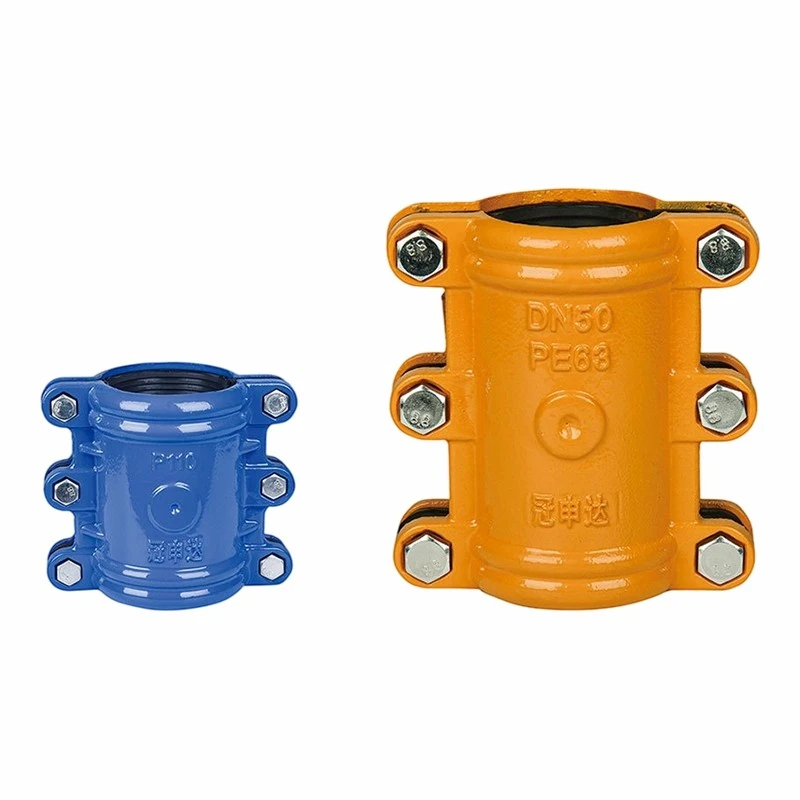
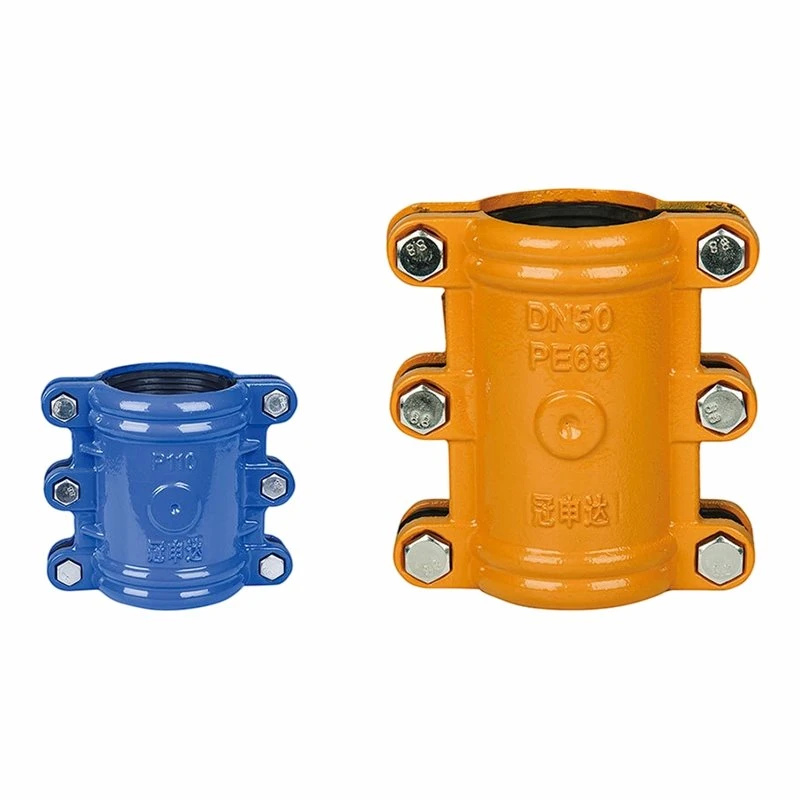
I also want to touch on installation best practices, because even the best clamp won’t work if installed incorrectly. For plastic pipes, here’s the step-by-step process we recommend: First, turn off the line and drain all water from the pipe to ensure the repair area is dry. Second, clean the socket and spigot with a non-abrasive cleaner to remove dirt, grease, or old sealant—any debris will break the seal. Third, lightly rough up the plastic surface with 120-grit sandpaper to help the gasket adhere; this is optional for metal pipes but critical for plastic. Fourth, apply a thin layer of pipe joint lubricant (not solvent cement—this is a repair, not a new installation) to the gasket and pipe surface to reduce friction during installation. Fifth, align the clamp over the socket and spigot joint, making sure it’s centered. Sixth, tighten the bolts in a crisscross pattern, applying equal torque to each bolt—use a torque wrench to hit the manufacturer’s recommended setting, which is usually lower than for metal clamps. Finally, pressure test the line to make sure the seal is holding before putting it back into service.
Let’s circle back to that Midwestern municipal team I mentioned earlier. They’d used a metal-specific socket clamp, didn’t prep the joint, and over-tightened the bolts, causing the HDPE pipe to crack a week after installation. When they reached out to us, we walked them through selecting the plastic-rated socket-end clamp, taught them the correct installation process, and they fixed the leak permanently in less than two hours. That’s why our team is always available to help customers choose the right clamp for their specific pipe and leak type—we don’t just sell products, we provide guidance for successful repairs.
If you’re still unsure whether a socket-end emergency repair clamp is right for your plastic pipes, consider these key questions: Is the leak at the socket joint? Is the pipe material compatible with plastic-rated clamps? Does the clamp’s pressure rating match your line’s operating pressure? Is the pipe wall intact and not brittle? If you can answer yes to these, a socket-end clamp is a viable, fast solution. For other scenarios, our range of clamps offers alternatives: if you need a clamp that works across multiple pipe materials, our universal pipeline emergency repair clamp is a great option; if you’re dealing with an elbow joint, check out our 90-degree elbow emergency repair clamp; if it’s a water line leak, our water pipe leak emergency repair clamp is designed specifically for that application.
At the end of the day, the goal of emergency repair clamps is to minimize downtime and avoid costly pipe replacement. Socket-end clamps have proven to be a workhorse for plastic pipe joints when used correctly, with a proven track record in residential, commercial, and municipal settings. But success depends on matching the clamp to your pipe, following installation best practices, and avoiding the common pitfalls that come from assuming all clamps are interchangeable.
If you’re facing a plastic pipe leak and want to make sure you use the right solution for your needs, our team is here to help. Whether you need guidance on selecting a socket-end emergency repair clamp for your PVC, HDPE, CPVC, or other plastic pipe, or you’re looking for a different type of repair clamp for your specific situation, we provide expert support to ensure your emergency repair is done safely and effectively.
References
- Plastics Pipe Institute. (2021). "Guidelines for Emergency Repair of Plastic Piping Systems." Retrieved from industry technical documentation.
- American Water Works Association. (2019). "Municipal Water Pipeline Repair Best Practices." AWWA Manual M28.
- Engineering Toolbox. (2022). "Material Properties of Common Plastic Pipes for Pressure Applications." Retrieved from engineering reference resources.
- Pipeline Rehabilitation and Repair Association. (2020). "Clamp Compatibility for Metal and Plastic Pipelines." PRRA Technical Bulletin 007.