

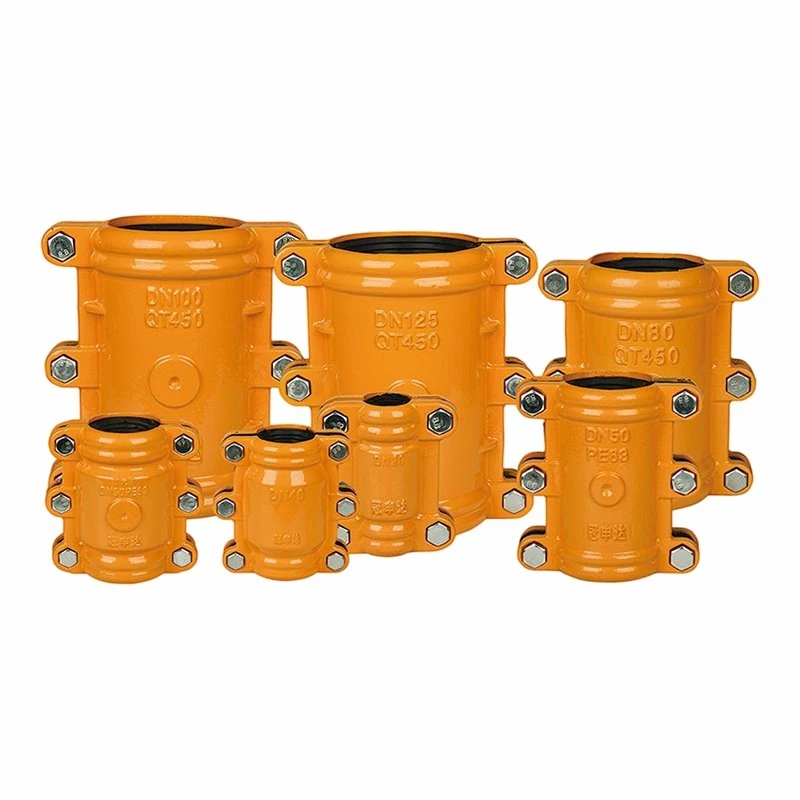
Hey everyone, if you’ve ever dealt with a medical gas pipeline issue, you know how high stakes those repairs are. Unlike fixing a burst water pipe under the sink, a leak in an oxygen, nitrous oxide, or medical air line in a hospital or clinic isn’t just an inconvenience—it can put patient lives at risk, disrupt critical care, and even trigger regulatory red flags. That’s why when we’re talking about Socket-End Emergency Repair Clamps for these exact systems, they can’t be off-the-shelf parts. They have a whole set of special requirements that make them very different from the repair clamps you’d use for residential water lines. Let me break down what those requirements actually are, from the perspective of a supplier who’s spent years refining these products for the medical space.
First and foremost, there’s material purity and compatibility. Medical gas pipelines carry gases that touch patients directly, even if indirectly. That means the repair clamp’s material can’t leach anything harmful—no chemicals, no particulates, nothing that would contaminate the gas or, worse, get into a patient’s bloodstream if there’s a backflow. We’re talking about materials that meet strict medical-grade standards, like stainless steel with a low carbon content (316L is a big one here) to resist corrosion and ensure it doesn’t react with the gases. For context, a regular repair clamp for water might use a cheaper steel or even brass that can break down over time, especially when exposed to oxygen. But in medical settings, even tiny metal particles or chemical residues are a no-go. Also, the material has to be compatible with every type of medical gas—oxygen, nitrous oxide, carbon dioxide, medical air, even some specialty gases—so it can’t degrade or cause a reaction no matter what’s flowing through the line. That’s a way higher bar than most industrial applications.
Next up, pressure integrity and leak-proof performance. Medical gas pipelines operate at specific, regulated pressures—usually between 50 and 100 psi, depending on the gas and the facility. An emergency repair clamp can’t just seal a leak; it has to maintain that pressure consistently, with zero chance of a catastrophic failure in the middle of a critical procedure. So the seal design is non-negotiable. We use EPDM or silicone gaskets that are specifically formulated for medical use—they’re resistant to compression set, meaning they stay flexible even after being clamped tight for years, and they don’t harden or crack over time. Also, the socket-end design means the clamp has to fit perfectly over the existing socket end of the pipe, no gaps. If there’s even a tiny gap between the clamp and the pipe, that’s a leak point waiting to happen, and in medical gas, even a small leak can dilute the gas flow to patients or let in contaminants like moisture. We test every single one of our clamps at 1.5 times the maximum operating pressure to make sure they hold, because when you’re in an emergency, you can’t afford a second failure.
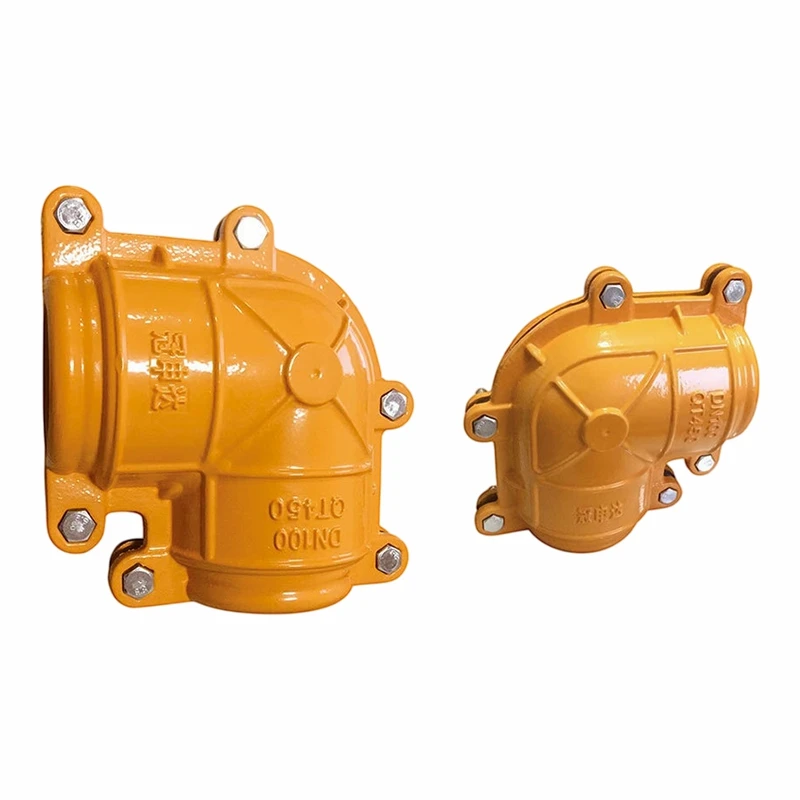
Then there’s compliance with strict medical regulations. This isn’t like buying a part for a construction project—medical facilities are audited constantly, and the repair products they use have to meet standards set by organizations like the FDA in the U.S., CE in Europe, and ISO 13485 for medical devices. Wait, but even beyond that, the repair process has to be quick enough for clinical settings. When a pipeline leak happens in a hospital, nurses and maintenance teams can’t wait hours or days for a specialized technician to come in with custom parts. That’s why socket-end repair clamps for medical gas have to be easy to install with basic tools—no welding, no soldering, no special training. A maintenance person with a few years of experience working with pipe systems should be able to install one in 15 minutes or less. Because if a surgery is about to start and the oxygen line is leaking, every minute counts. That’s a big difference from, say, a 90-Degree Elbow Emergency Repair Clamp, which might have a slightly different installation process tailored to elbow joints, but still has to keep that speed and ease for time-sensitive medical environments.
Wait, let’s talk about compatibility with existing pipe systems too. Medical gas pipelines are standardized, but different facilities might use different socket sizes—1/2 inch, 3/4 inch, 1 inch, all the way up to even larger sizes for main lines. A one-size-fits-all clamp just won’t work. We have to make sure our socket-end clamps are available in all the standard sizes used by medical gas providers, and they have to fit perfectly, no matter the age of the pipe. Older medical pipes might have slight wear or surface imperfections, so the clamp has to be forgiving enough to seal around those, but still tight enough to prevent leaks. That’s something you don’t have to worry as much about in other industries—water distribution pipes might have some standardization, but not to the exact same level as medical gas, where consistency is key for patient safety.
Another big one is corrosion resistance in all environments. Medical facilities can be humid—especially places like operating rooms, emergency departments, or intensive care units. Also, maintenance teams use cleaning chemicals to sanitize the area around pipelines, so the clamp has to resist corrosion from both humidity and common disinfectants like hydrogen peroxide or quaternary ammonium compounds. If the clamp rusts, that’s not just a visual issue—it’s a contamination risk for the medical gas, and it can weaken the clamp over time, leading to a leak down the line. We test our clamps in salt spray chambers for hundreds of hours to make sure they don’t corrode, because a rusted clamp in a critical care area is the last thing anyone wants.
Also, transparency and traceability. Medical facilities need to know exactly where every part they use comes from, especially in emergency situations. That means every socket-end repair clamp we sell has a unique batch number, and we can provide full documentation of the material testing, compliance certifications, and quality control checks. If there’s ever a question about a clamp, the facility can look up its history in minutes. That’s not required for most other repair clamps—like the Water Distribution Tee Repair Clamp, which might not need that level of traceability. But in medical settings, accountability is non-negotiable.
Wait, let’s not forget about vibration resistance. Hospitals have a lot of equipment that vibrates—ventilators, MRI machines, pumps, even people walking around. The pipeline system is connected to all this, so the repair clamp has to hold up under constant vibration without loosening. If the clamp starts to move over time, the seal will break, leading to a leak. We use locking mechanisms on our clamps—heavy-duty bolts that stay tight, no matter how much the pipe vibrates. We test this by mounting clamps on pipes and running them through vibration cycles that mimic the conditions in a busy hospital, and if they don’t hold, we go back to the drawing board.
Let me give you a quick example of why this all matters. A few years back, a small clinic we work with had a leak in their nitrous oxide pipeline socket end. They tried using a generic repair clamp from a hardware store—one meant for water. Within a week, the clamp started leaking, because the material wasn’t compatible with nitrous oxide, and the seal wasn’t tight enough for the pressure. They almost had to delay a minor procedure, which would have been a huge deal for their patients. That’s exactly why medical gas repair clamps can’t be generic—they need those special requirements we’ve been talking about.
And this isn’t just for straight pipe runs. Medical gas systems have all sorts of fittings too—tees, elbows, flanges. For example, a Flanged Tee Emergency Repair Clamp has to meet similar pressure and material standards, but it’s tailored for tees, which are common in medical pipeline networks. Or an Elbow Joint Emergency Repair Clamp, which has to be flexible enough to fit the curved joint while still maintaining a tight seal. The Multi-Purpose Pipeline Emergency Repair Clamp is a different story—it works for more general pipelines, but even it has to be up to code if used in a medical setting. Our socket-end clamps are built specifically for that exact socket joint, so they hit every mark that generic clamps miss.
So to wrap this up, the special requirements for socket-end emergency repair clamps for medical gas pipelines boil down to one core thing: patient safety. Every design choice, material selection, and test we run is focused on making sure the clamp works when it’s needed most—no leaks, no contamination, no delays. Unlike repair clamps for other industries, these have to balance speed, compliance, purity, and pressure integrity all at once, and that’s not easy. If you’re a hospital maintenance manager, a medical gas engineer, or anyone responsible for pipeline safety in a clinical setting, you don’t want to cut corners here.
If you’re looking for a reliable socket-end emergency repair clamp that meets all these requirements, or you want to check out our other products like the 90-Degree Elbow Emergency Repair Clamp, Water Distribution Tee Repair Clamp, Flanged Tee Emergency Repair Clamp, Multi-Purpose Pipeline Emergency Repair Clamp, or Elbow Joint Emergency Repair Clamp, get in touch. We’ve worked with dozens of medical facilities to customize our clamps to their exact needs, and we’re here to help with any questions or bulk orders.
References
- International Organization for Standardization (ISO). ISO 13485:2016, Medical Devices – Quality Management Systems – Requirements for Regulatory Purposes. Geneva: ISO, 2016.
- U.S. Food and Drug Administration (FDA). Guidance for Industry: Medical Gas Pipeline Systems. Silver Spring, MD: FDA, 2020.
- European Committee for Standardization (CEN). EN ISO 7396-1:2019, Medical Gas Pipeline Systems – Part 1: General Requirements. Brussels: CEN, 2019.
- National Fire Protection Association (NFPA). NFPA 99: Health Care Facilities Code. Quincy, MA: NFPA, 2021.
- American Society of Mechanical Engineers (ASME). ASME B31.5: Refrigeration Piping and Heat Transfer Components. New York, NY: ASME, 2022.