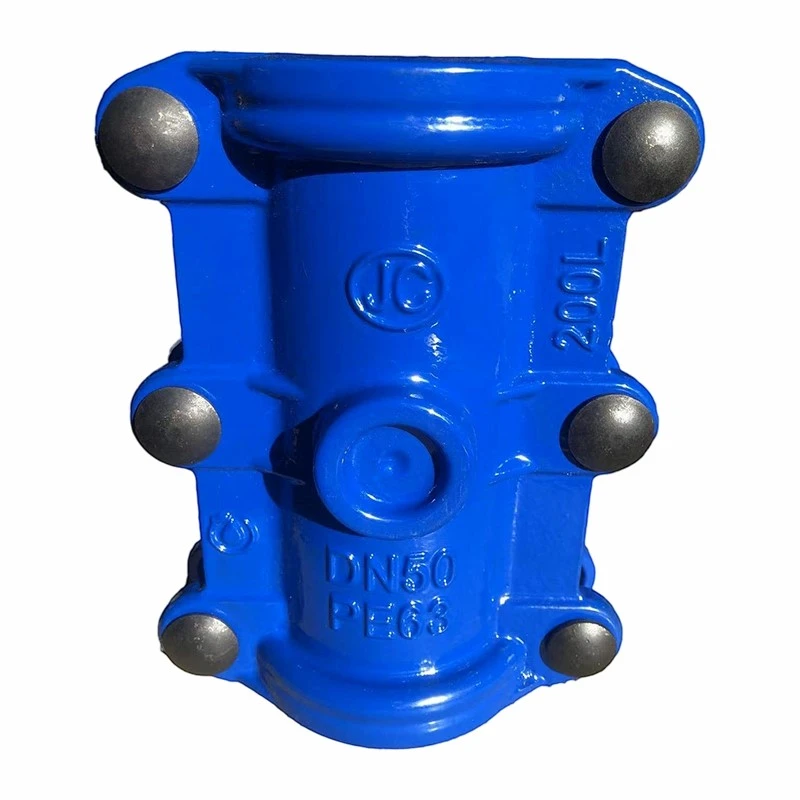
Preventing Damage at the Source Through Precise Selection
Exact Dimensional Match: Control the variance between the clamp's inner diameter and the pipe's outer diameter to within ±2mm; strictly prohibit forcing a smaller clamp onto the pipe, which could cause the pipe wall to deform or crack due to excessive squeezing.
Prioritize Wide, Full-Arc Designs: Select full-arc clamps with a width of at least 30mm to increase the contact area and distribute clamping pressure; this prevents narrow clamps from creating a localized "wire-cutting" effect that could scratch the pipe wall.
Use Compatible Cushioning Liners:For non-metallic pipes (such as PE, PVC, or plastic-lined pipes), clamps must feature soft rubber or PTFE liners to completely prevent direct, hard contact between the metal clamp and the pipe's outer surface.
Eliminating Risks Through Pre-Installation Preparation
Thorough Pipe Surface Preparation: Completely remove burrs, welding slag, debris, and sharp protrusions from the pipe's outer surface, and smooth the pipe edges with sandpaper to prevent hard particles trapped between the clamp and the pipe from causing dents.
Precise Coaxial Alignment: Ensure the coaxial misalignment between the two pipe sections is ≤5mm and the joint gap is ≤2mm; use a level to verify horizontal alignment, preventing pipe tilt that could cause uneven, excessive stress on one side of the clamp.